The Unseen Layers of Sustainable Cities: How Permeable Pavement, Rain Gardens, and Decentralized Energy Are Crafting the Urban Tapestry of Tomorrow
Cities are no longer just concrete jungles; they are evolving into living, breathing organisms that adapt, regenerate, and coexist with nature. The transformation is subtle but profound, woven into the very fabric of urban design through innovations that prioritize sustainability, resilience, and community. Among these, permeable pavement, rain gardens, and decentralized energy grids stand out as unsung heroes, quietly reshaping how cities function and how residents interact with their environment. These elements are not just infrastructure—they are the threads of a new urban tapestry, one that promises a greener, more inclusive future.
The Quiet Revolution Beneath Our Feet
Permeable pavement is one of those innovations that often goes unnoticed, yet its impact is far-reaching. Unlike traditional asphalt or concrete, permeable pavement allows water to seep through its surface, reducing runoff and replenishing groundwater supplies. This might seem like a small change, but in cities where stormwater management is a growing challenge, it’s a game-changer. By preventing flooding and filtering pollutants, permeable pavement doesn’t just protect infrastructure—it safeguards ecosystems and public health. Imagine walking down a street where puddles are a rarity, where rainwater is not a nuisance but a resource, and where the ground beneath your feet is part of a larger system working to keep the city balanced.
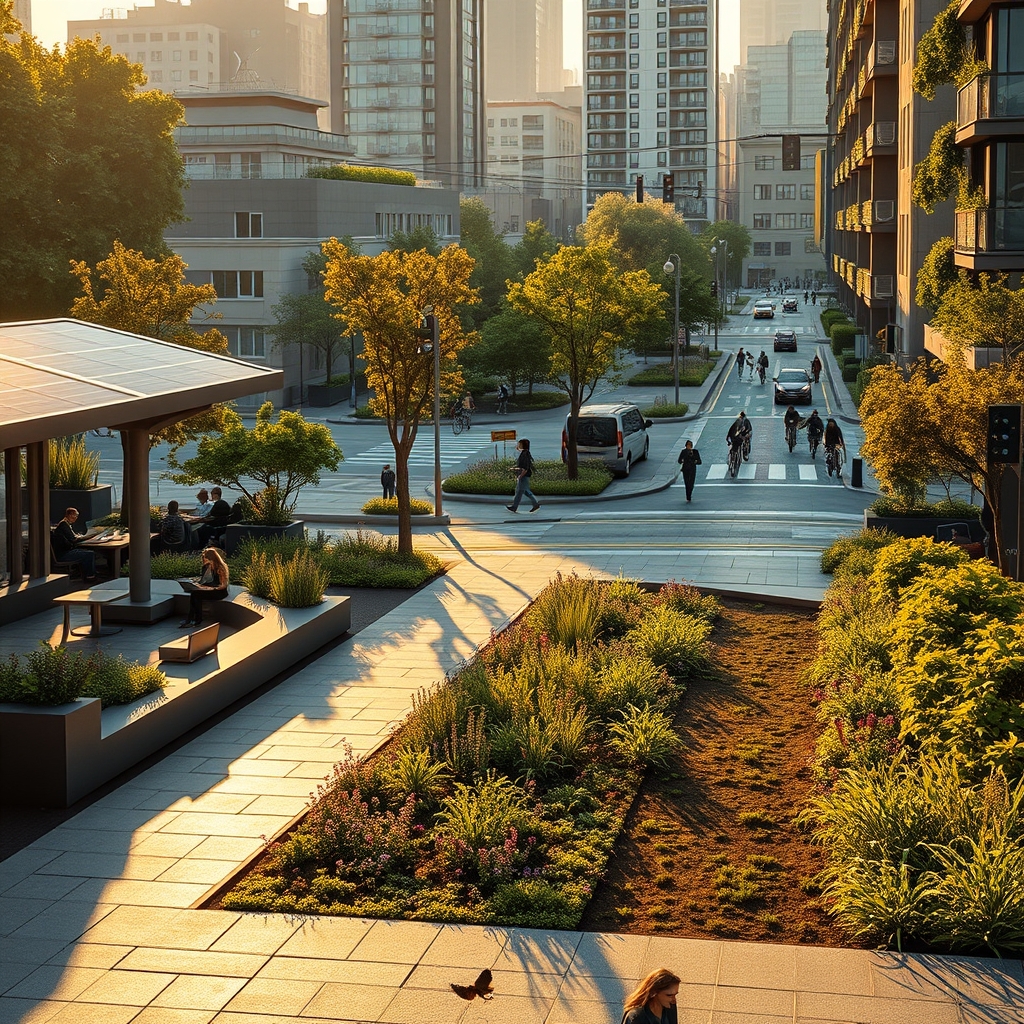
But permeable pavement is just one piece of the puzzle. Pair it with rain gardens—carefully designed depressions planted with native vegetation—and you create a dynamic duo that turns urban spaces into natural water filters. Rain gardens capture and absorb runoff, allowing it to slowly infiltrate the soil while providing habitat for pollinators and adding a touch of beauty to neighborhoods. They are a testament to how small, intentional design choices can yield significant environmental benefits. In a world where every drop of water counts, these gardens are not just decorative; they are essential.
Energy That Flows Like a River
While water management is critical, so too is the way cities generate and distribute energy. Traditional centralized energy grids are often inefficient, vulnerable to outages, and reliant on fossil fuels. Enter decentralized energy grids—a network of localized energy sources, such as solar panels, wind turbines, and battery storage systems, that empower communities to produce and manage their own power. This shift is not just about sustainability; it’s about resilience. When energy is generated closer to where it’s used, cities become less susceptible to blackouts and price fluctuations. It also democratizes energy, giving neighborhoods the autonomy to invest in renewable sources and reduce their carbon footprint.
Solar-powered commons are a prime example of this decentralized approach. These shared spaces, equipped with solar panels and often integrated with community gardens or co-working hubs, serve as gathering points where residents can charge devices, grow food, or simply enjoy a moment of connection. They embody the idea that energy should be accessible, equitable, and woven into the social fabric of a community. When cities prioritize such spaces, they send a clear message: sustainability is not a luxury—it’s a necessity for all.
Designing for People, Not Just Function
The most successful sustainable urban innovations are those that blend functionality with human-centered design. Take traffic calming zones, for instance. These areas use design elements like speed bumps, narrowed roads, and pedestrian-friendly crossings to slow down traffic and create safer, more walkable streets. They don’t just reduce accidents; they encourage people to linger, interact, and reclaim public spaces from the dominance of cars. When streets are designed for people, they become extensions of the community, fostering a sense of belonging and well-being.
Similarly, bicycle transit lanes are more than just paths for cyclists—they are symbols of a city’s commitment to alternative transportation. When well-designed and connected, these lanes make cycling a viable option for commuters, reducing traffic congestion and air pollution. They also promote health and equity, offering a low-cost, accessible mode of transport for all residents. Cities that invest in such infrastructure are not just building roads; they are building a culture of sustainability.
The Ripple Effect of Small Changes
What makes these innovations so powerful is their ability to create ripple effects. A single rain garden might seem insignificant, but when integrated into a network of green infrastructure, it contributes to a larger system that improves air quality, reduces urban heat, and supports biodiversity. Similarly, a decentralized energy grid might start with a few solar panels on a community center, but it can grow into a movement that transforms how an entire neighborhood thinks about power. These changes are incremental, but their cumulative impact is transformative.
Urban sustainability is not about grand gestures or overnight transformations. It’s about the small, deliberate choices that add up over time—choosing permeable pavement over concrete, planting a rain garden instead of a lawn, or installing solar panels on a rooftop. It’s about designing cities that work with nature, not against it, and creating spaces that prioritize people over cars, community over convenience. The future of urban living is not a distant dream; it’s being built today, one innovation at a time, in the streets, parks, and neighborhoods where we live, work, and play.
As cities continue to grow and evolve, the challenge will be to ensure that these innovations are not just isolated projects but part of a cohesive vision for sustainable urban living. The tools are already here—permeable pavement, rain gardens, decentralized energy, and more. The question is whether we will use them to craft a future where cities are not just places to live, but thriving ecosystems that nurture both people and the planet. The answer lies in the choices we make today, in the small but meaningful steps we take to weave sustainability into the very fabric of urban life.