The Symphony of Sustainability: How Net Zero Homes and Universal Design Harmonize for the Future
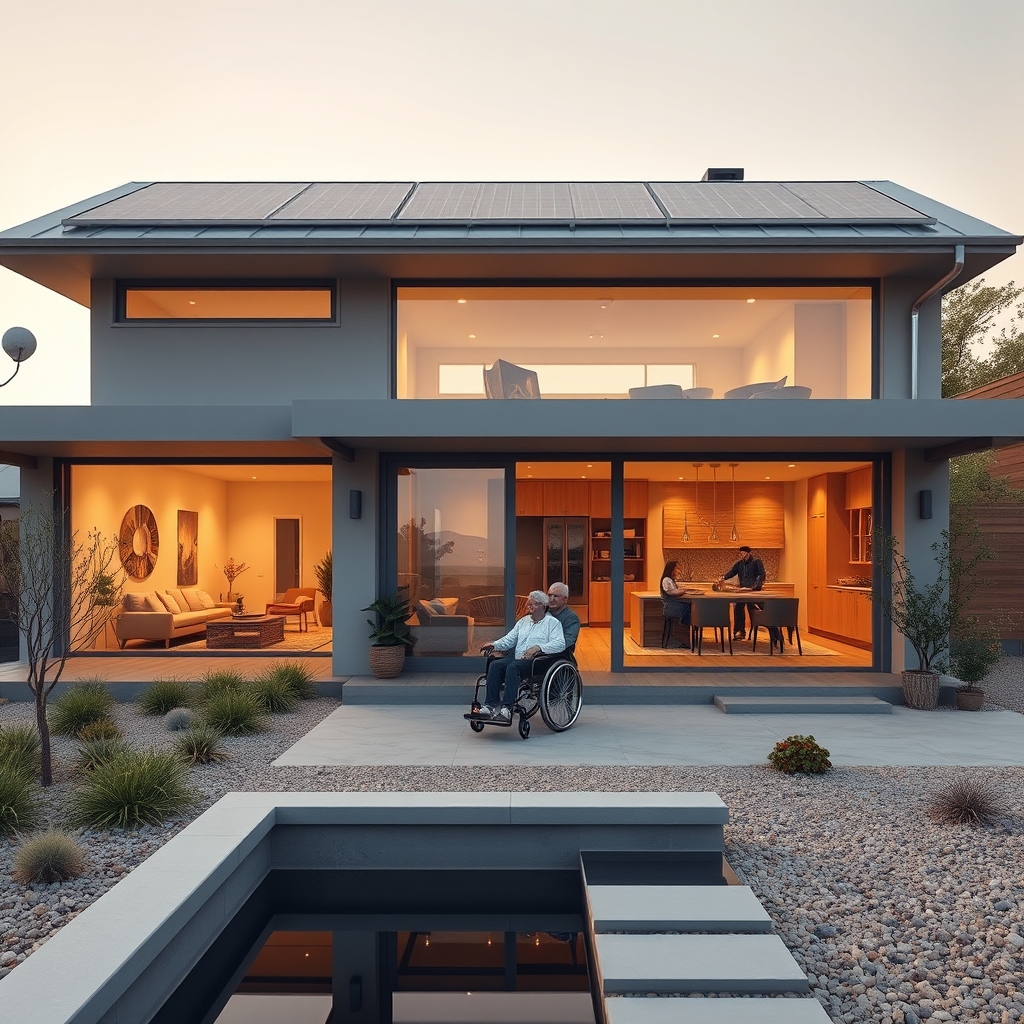
The modern home is no longer just a shelter; it is a living, breathing entity that adapts to the needs of its inhabitants while treading lightly on the planet. As climate concerns intensify and lifestyles evolve, the demand for homes that are both sustainable and inclusive has never been greater. The fusion of Net Zero Homes and Universal Design is not just a trend—it is a transformative approach that redefines what it means to live comfortably, efficiently, and responsibly. This synergy is not about compromise; it is about creating spaces that work for everyone, from young families to aging populations, without sacrificing environmental stewardship.
The Foundation of Net Zero Living
At the heart of a Net Zero Home lies the principle of balance—producing as much energy as it consumes over the course of a year. This is achieved through a combination of cutting-edge technologies and thoughtful design choices. Solar roof integration has become a cornerstone of this movement, transforming rooftops into power generators that harness the sun’s energy. Advances in photovoltaic technology have made solar panels more efficient and aesthetically pleasing, allowing them to blend seamlessly into the architecture of a home. When paired with high-performance insulation and energy recovery ventilators, these systems create a tightly controlled environment where energy loss is minimized, and indoor air quality is optimized.
But energy efficiency is only part of the equation. Water conservation plays a critical role in the sustainability of a Net Zero Home. Rainwater harvesting systems and drought-tolerant landscaping work in tandem to reduce reliance on municipal water supplies. These systems capture and store rainwater for non-potable uses like irrigation and toilet flushing, while native plants and permeable surfaces minimize runoff and support local ecosystems. The result is a home that not only reduces its carbon footprint but also fosters a deeper connection to the natural world.
Designing for All: The Principles of Universal Design
While sustainability addresses the environmental impact of a home, Universal Design ensures that the space is accessible and functional for people of all ages and abilities. This philosophy goes beyond mere compliance with accessibility standards; it is about creating environments that are intuitive, flexible, and welcoming to everyone. Features like zero-step entries, wide doorways, and lever-style handles are just the beginning. The true magic of Universal Design lies in its subtlety—it is invisible when done well, seamlessly integrating into the home’s aesthetic while enhancing usability.
One of the most impactful applications of Universal Design is in multi-generational layouts. As families increasingly choose to live together across generations, homes must adapt to accommodate diverse needs. Open floor plans with flexible spaces, such as convertible guest rooms or first-floor primary suites, allow for aging in place without sacrificing independence. Custom mudrooms with ample storage and seating provide a practical solution for families with children, pets, or mobility aids, while acoustic insulation ensures that shared spaces remain peaceful and private. These design choices are not just about accessibility; they are about fostering connection and reducing the stress of daily life.
The Role of Smart Technology in Modern Homes
The integration of home automation hubs and smart systems has revolutionized the way we interact with our living spaces. These technologies bridge the gap between sustainability and accessibility, offering solutions that are both energy-efficient and user-friendly. For instance, smart thermostats can learn a household’s routines and adjust radiant floor heating or cooling systems accordingly, reducing energy waste without sacrificing comfort. Voice-activated controls and automated lighting systems make it easier for individuals with mobility or vision impairments to navigate their homes independently, while electric vehicle charging stations future-proof the home for the growing adoption of clean transportation.
Beyond convenience, smart technology also enhances the performance of a home. Energy recovery ventilators (ERVs) work quietly in the background, exchanging stale indoor air with fresh outdoor air while retaining heat or coolness. This not only improves indoor air quality but also reduces the load on heating and cooling systems. Similarly, passive house standards leverage natural ventilation and thermal mass to maintain comfortable temperatures year-round, further reducing the need for mechanical systems. When combined with healthy building materials like low-VOC paints and formaldehyde-free insulation, these technologies create a living environment that is as nurturing as it is efficient.
Building for the Future: Innovations in Construction
The construction industry has seen a wave of innovation that aligns perfectly with the goals of Net Zero and Universal Design. Prefabricated modules and concrete form construction are two such advancements that are reshaping the way homes are built. Prefabricated modules allow for greater precision and efficiency in construction, reducing waste and speeding up the building process. These modules can be customized to include features like smart framing, which uses less material without compromising structural integrity, or cross-ventilated spaces that promote natural airflow and cooling.
Concrete form construction, on the other hand, offers exceptional durability and energy efficiency. Insulated concrete forms (ICFs) create a tight building envelope that minimizes air leakage and provides superior insulation. This method is particularly well-suited for homes in extreme climates, as it helps maintain stable indoor temperatures with minimal energy input. Additionally, the thermal mass of concrete absorbs and releases heat slowly, further enhancing the home’s energy performance. When paired with minimalist architecture, these construction techniques result in homes that are not only sustainable and accessible but also timeless in their design.
The journey toward a more sustainable and inclusive future is not a distant dream—it is happening now, one home at a time. The homes we build today are a reflection of our values, our priorities, and our commitment to the well-being of both people and the planet. By embracing the principles of Net Zero living and Universal Design, we are not just creating spaces that meet our needs; we are crafting legacies that will endure for generations. These homes are more than structures; they are a testament to what is possible when innovation, compassion, and responsibility converge. In a world where change is the only constant, the homes we choose to build today will shape the way we live tomorrow.