Curved Elegance and Earthy Tones: Redefining Modern Interiors with Mixed Textures and Smart Functionality
In the ever-evolving world of interior design, the lines between tradition and innovation are blurring more beautifully than ever. Homeowners and designers alike are embracing a philosophy that celebrates the warmth of natural elements while seamlessly integrating the conveniences of modern technology. This shift is not just about aesthetics—it’s about creating spaces that feel alive, functional, and deeply personal. At the heart of this movement lies a harmonious blend of curved furniture, mixed wood tones, and earthy palettes, all elevated by thoughtful details like aged metals and textured surfaces.
The Rise of Curved Furniture: Softening the Modern Edge
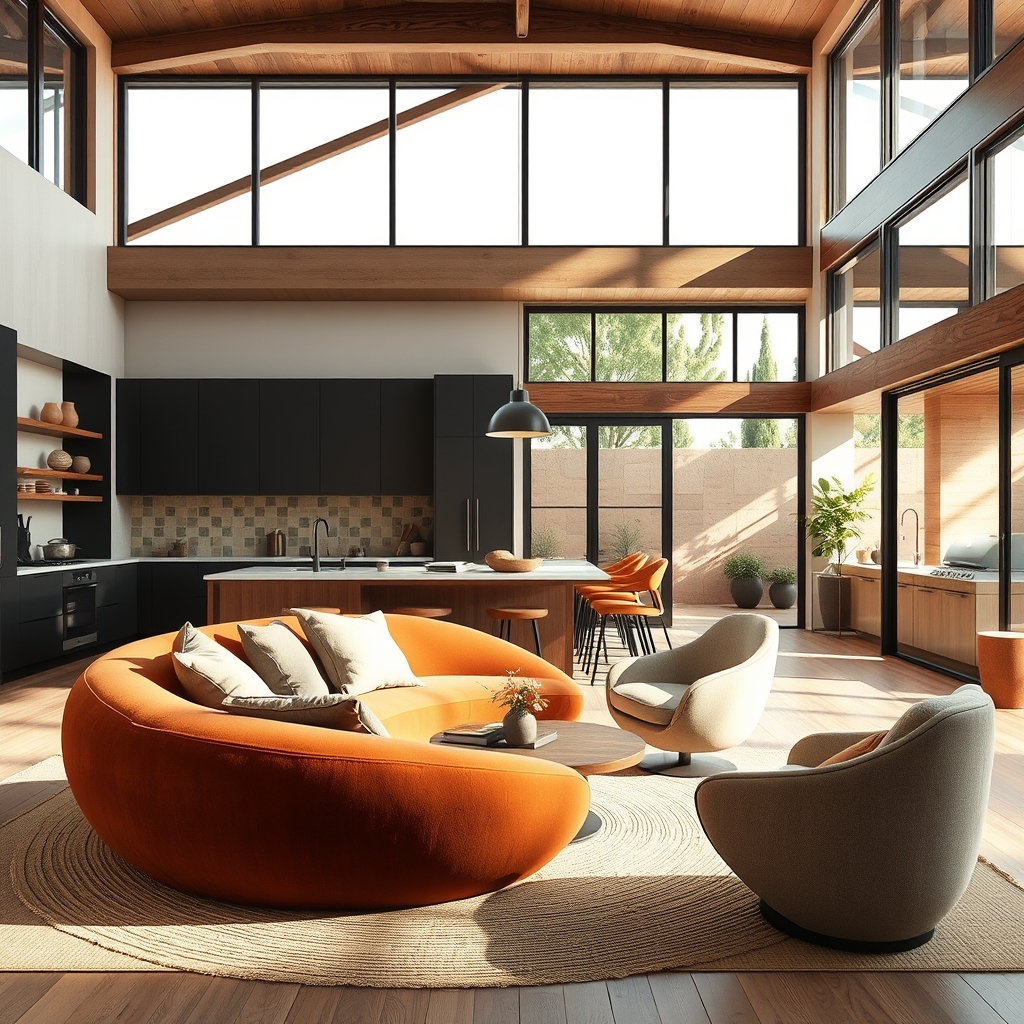
Gone are the days when sharp angles and rigid lines dominated contemporary interiors. Today, curved furniture is taking center stage, bringing a sense of fluidity and comfort to living spaces. From sofas with gentle arcs to round coffee tables and organically shaped chairs, these pieces soften the visual impact of a room while enhancing its functionality. The appeal of curved furniture lies in its ability to create a more inviting atmosphere—one that encourages relaxation and conversation.
Designers are increasingly turning to these organic forms to counterbalance the minimalist tendencies of modern architecture. A curved sofa, for instance, can break up the monotony of straight walls and angular layouts, adding a dynamic focal point to a room. When paired with mixed wood tones, such as a walnut sideboard against a backdrop of lighter oak flooring, the effect is both sophisticated and warm. This approach not only adds depth to a space but also pays homage to the modern heritage of design, where craftsmanship and form go hand in hand.
Earthy Palettes and Biophilic Design: Bringing Nature Indoors
The connection between our living spaces and the natural world has never been more important. Biophilic design, which seeks to integrate nature into interiors, is flourishing, and earthy palettes are at the forefront of this trend. Think warm terracotta, deep forest greens, muted ochres, and soft clay tones—colors that evoke the tranquility of the outdoors while grounding a space in a sense of calm.
These palettes work beautifully with wooden ceilings and textured surfaces, such as linen upholstery, rattan accents, or stone countertops. The key is to layer different materials and finishes to create a rich, tactile experience. For example, a kitchen with open shelving made of reclaimed wood, paired with matte black cabinetry and a backsplash of handmade zellige tiles, can feel both rustic and refined. This approach not only enhances the visual appeal of a space but also fosters a deeper emotional connection to the environment.
Colour Drenching: Bold Statements with Subtle Sophistication
While neutral tones remain a staple in modern interiors, there’s a growing appetite for colour drenching—a technique where a single hue is used across walls, ceilings, and even furniture to create a cohesive, immersive experience. This trend is particularly effective in smaller spaces, where it can make a room feel larger and more intentional. Imagine a bathroom drenched in deep sage green, with matching tiles, a freestanding tub, and floating shelves holding terracotta pots. The result is a spa-like retreat that feels both luxurious and serene.
Colour drenching works best when paired with natural materials and textures. A living room painted in a warm ochre, for instance, can be balanced with a jute rug, linen curtains, and a mix of aged metals like brass and bronze. The contrast between the bold color and the organic textures creates a space that is vibrant yet grounded, modern yet timeless.
Smart Functionality: The Invisible Backbone of Modern Living
As much as aesthetics play a role in contemporary design, functionality remains paramount. Today’s homeowners are looking for ways to make their spaces more efficient and adaptable, without sacrificing style. This is where smart bidets, hidden pantries, and kitchen zoning come into play, offering solutions that are as practical as they are elegant.
Hidden pantries, for example, are a game-changer in open-concept kitchens. These sleek, concealed storage solutions allow homeowners to keep clutter out of sight while maintaining a clean, minimalist aesthetic. Similarly, kitchen zoning—where different areas of the kitchen are designated for specific tasks—enhances workflow and makes cooking a more enjoyable experience. Pair this with smart thermostats and energy-efficient lighting, and you have a home that is not only beautiful but also intuitive and sustainable.
Multi-Functional Rooms: The Evolution of Open-Concept Living
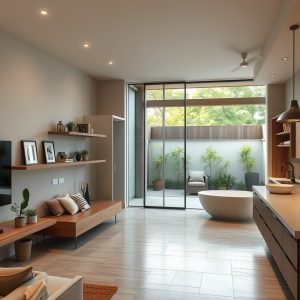
The concept of open-concept living has evolved beyond simply removing walls. Today, it’s about creating spaces that can adapt to multiple uses, whether it’s a home office that doubles as a guest room or a living area that transforms into a dining space for entertaining. Floating shelves and modular furniture are key to achieving this flexibility, allowing homeowners to reconfigure their spaces as needed.
For instance, a living room with a built-in desk and floating shelves can easily transition from a workspace to a cozy lounge area. Add a wooden ceiling with exposed beams and a mix of sustainable materials like cork and bamboo, and you have a space that feels both modern and timeless. This approach not only maximizes square footage but also reflects the way we live today—dynamic, adaptable, and always evolving.
Outdoor Kitchens and Spa Bathrooms: Blurring the Lines Between Inside and Out
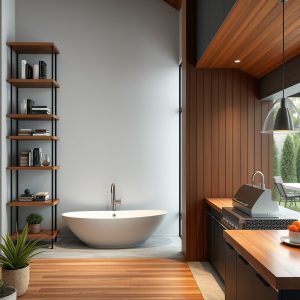
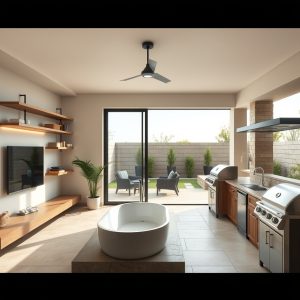
The boundaries between indoor and outdoor living are becoming increasingly fluid, with outdoor kitchens and spa bathrooms leading the charge. An outdoor kitchen, complete with a pizza oven, built-in grill, and weather-resistant cabinetry, extends the functionality of a home while creating a seamless connection to nature. When designed with earthy palettes and aged metals, these spaces feel like a natural extension of the interior, rather than an afterthought.
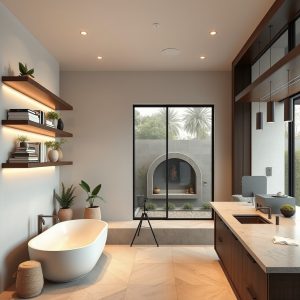
Similarly, spa bathrooms are being designed to evoke the tranquility of a luxury retreat. Think heated floors, rainfall showers, and freestanding tubs surrounded by lush greenery. The use of natural materials like stone and wood, combined with soft lighting and biophilic design elements, transforms these spaces into sanctuaries of relaxation. Whether it’s a small powder room or a master ensuite, the goal is to create a space that feels like a personal oasis.
As we continue to redefine what it means to live well, our homes are becoming more than just shelters—they are reflections of our values, our lifestyles, and our aspirations. The beauty of modern design lies in its ability to adapt, to blend the old with the new, and to create spaces that are as functional as they are inspiring. Whether it’s through the soft curves of a sofa, the rich tones of a wooden ceiling, or the quiet efficiency of a smart thermostat, every detail contributes to a home that feels uniquely yours. The future of interior design is not about following trends blindly, but about curating a space that tells your story, one thoughtful layer at a time.