The Hidden Poetry of Modern Heritage: How Biophilic Design, Earthy Palettes, and Floating Shelves Craft a Home That Breathes

There is a quiet magic in a home that feels alive—not in the way of clutter or chaos, but in the way of a slow, deep inhale. It’s the kind of space that doesn’t just shelter you but wraps around you like an old, well-loved garment, familiar yet full of unexpected comfort. This is the essence of modern heritage, a design philosophy that marries the timeless with the contemporary, the organic with the intentional. And at its heart lies a trio of elements that transform mere rooms into sanctuaries: biophilic design, earthy palettes, and the understated elegance of floating shelves.
The Whisper of Nature in Biophilic Design
Biophilic design isn’t just about adding a few plants to a windowsill or hanging a landscape painting on the wall. It’s a deeper, more instinctual connection to the natural world, one that acknowledges how profoundly our surroundings shape our well-being. Imagine walking into a living room where the light filters through sheer linen curtains, casting dappled shadows that mimic the play of sunlight through leaves. The walls are clad in reclaimed wood, its grain telling stories of forests long past, while a stone fireplace anchors the space with its raw, unpolished beauty. This isn’t decoration; it’s an invitation to slow down, to breathe, to remember that we are part of something larger than ourselves.
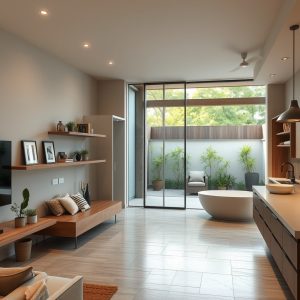
Incorporating biophilic design doesn’t require a grand gesture. It can be as simple as choosing furniture with organic shapes—think curved sofas that echo the contours of a riverbank or tables with live edges that preserve the natural form of the wood. Even the placement of windows matters, framing views of the outdoors like living art. The goal is to blur the line between inside and out, to create a space that feels less like a box and more like a living, breathing extension of the earth.
The Soulful Depth of Earthy Palettes
Colour has a language all its own, and earthy palettes speak in tones of warmth, comfort, and quiet strength. These are the hues of the natural world—terracotta, olive green, warm ochre, deep umber—shades that ground a space and give it a sense of permanence. Unlike the stark whites or cool greys that dominated interiors in decades past, earthy palettes invite you to linger, to sink into the richness of a room rather than rush through it.
But earthy palettes are more than just a collection of colours; they’re a mood, a feeling. They work best when layered, like the strata of a canyon wall. Start with a base of warm neutrals—think sand, clay, or muted taupe—then build up with deeper tones in textiles, artwork, and accessories. A mustard-yellow throw on a chocolate-brown sofa, a rust-coloured vase on a driftwood side table, or a deep green velvet armchair in a room with warm wooden floors. These combinations don’t just look good; they feel good, like wrapping yourself in a quilt made of sunlight and soil.
The Art of Subtraction: Floating Shelves as Modern Heritage’s Silent Storytellers
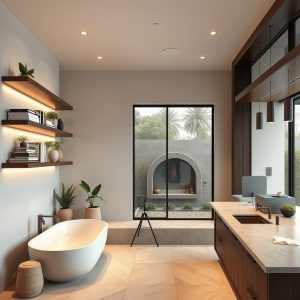
In a world where so much is vying for our attention, there’s something profoundly refreshing about a design element that doesn’t demand to be noticed. Floating shelves are the unsung heroes of modern heritage, offering both function and form without overwhelming a space. They’re the perfect antidote to clutter, a way to display the things that matter—books, ceramics, a sprig of dried lavender—without the visual noise of bulky furniture.
But floating shelves are more than just storage; they’re an opportunity to curate a narrative. A single shelf might hold a stack of vintage novels, a hand-thrown pottery mug, and a small framed photograph, each item telling a story about the people who live there. The key is restraint. Instead of filling every inch, leave some space for the eye to rest, for the mind to wander. This is where the magic of modern heritage lies—not in the things you add, but in the moments of stillness you create.
Where Function Meets Poetry: The Modern Heritage Kitchen
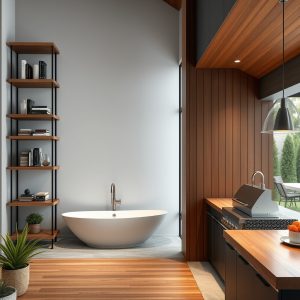
The kitchen has always been the heart of the home, but in modern heritage design, it’s less about high-tech gadgets and more about creating a space that feels as good as it functions. This is where kitchen zoning comes into play, a concept that divides the space into distinct areas for cooking, prepping, and gathering. Imagine a large island with a butcher-block countertop for chopping vegetables, a built-in cutting board that slides away when not in use, and open shelving above to display copper pots and woven baskets. The materials are tactile—wood, stone, metal—each chosen for its durability and its ability to age gracefully.
And then there’s the hidden pantry, a nod to the past with a modern twist. No longer just a closet for canned goods, today’s hidden pantries are sleek, organized, and often integrated into the design of the kitchen itself. Push a panel to reveal deep shelves lined with glass jars of grains and spices, or pull out a drawer to find a built-in wine rack. These are the details that make a kitchen feel like a place where memories are made, where the act of cooking becomes a ritual rather than a chore.
The Bathroom as a Sanctuary: Where Biophilic Design Meets Spa-Like Serenity
If the kitchen is the heart of the home, the bathroom is its soul—a place of retreat, of renewal. In modern heritage design, the bathroom is no longer just a functional space but a sanctuary, a place where biophilic elements and spa-like features come together to create a sense of calm. Picture a freestanding bathtub set against a backdrop of warm wooden planks, the grain running horizontally to mimic the flow of water. A large window frames a view of the garden, while a skylight above bathes the room in natural light. The floors are heated stone, smooth and cool underfoot, and the vanity is a single slab of honed marble, its veins running like rivers across the surface.
Smart bidets and heated towel racks add a touch of modern luxury, but the real magic lies in the details—the way the light filters through a frosted glass partition, the sound of water trickling from a wall-mounted fountain, the scent of eucalyptus rising from a steam shower. This is a bathroom that doesn’t just cleanse the body; it soothes the mind.
Modern heritage isn’t about replicating the past or chasing the latest trends. It’s about creating a home that feels timeless, a space that evolves with you, that holds the stories of your life in its walls and its furnishings. It’s about choosing materials that age with grace, colours that comfort rather than overwhelm, and designs that invite you to slow down and savour the moment. In a world that moves too fast, a home like this isn’t just a refuge; it’s a reminder of what truly matters.