The Green Spine: How Linear Green Ribbons and Pocket Neighborhoods Are Crafting the Next Generation of Urban Living
The modern urban landscape is undergoing a quiet transformation, one where the rigid lines of traditional planning are giving way to fluid, human-centric designs. At the heart of this evolution lies a delicate balance between nature and architecture, between density and openness, and between privacy and community. Two concepts—linear green ribbons and pocket neighborhoods—are emerging as cornerstones of this new paradigm, reshaping how we experience cities and the spaces we call home.
The Rise of Linear Green Ribbons
Linear green ribbons are more than just strips of vegetation; they are the lifelines of urban ecosystems. These continuous corridors of greenery weave through neighborhoods, connecting parks, residential areas, and commercial hubs while serving multiple ecological and social functions. Unlike isolated green spaces, linear ribbons create a seamless network that supports biodiversity, mitigates urban heat, and manages stormwater through sustainable drainage systems. Cities like Copenhagen and Singapore have already embraced this approach, integrating green ribbons into their urban fabric to foster resilience and livability.
But their impact goes beyond environmental benefits. These ribbons act as natural pathways, encouraging walking and cycling while reducing reliance on cars. They soften the hard edges of urbanization, providing visual relief and psychological respite in densely built environments. When designed thoughtfully, they become more than infrastructure—they become places where communities gather, children play, and nature thrives amidst concrete.
The Intimacy of Pocket Neighborhoods
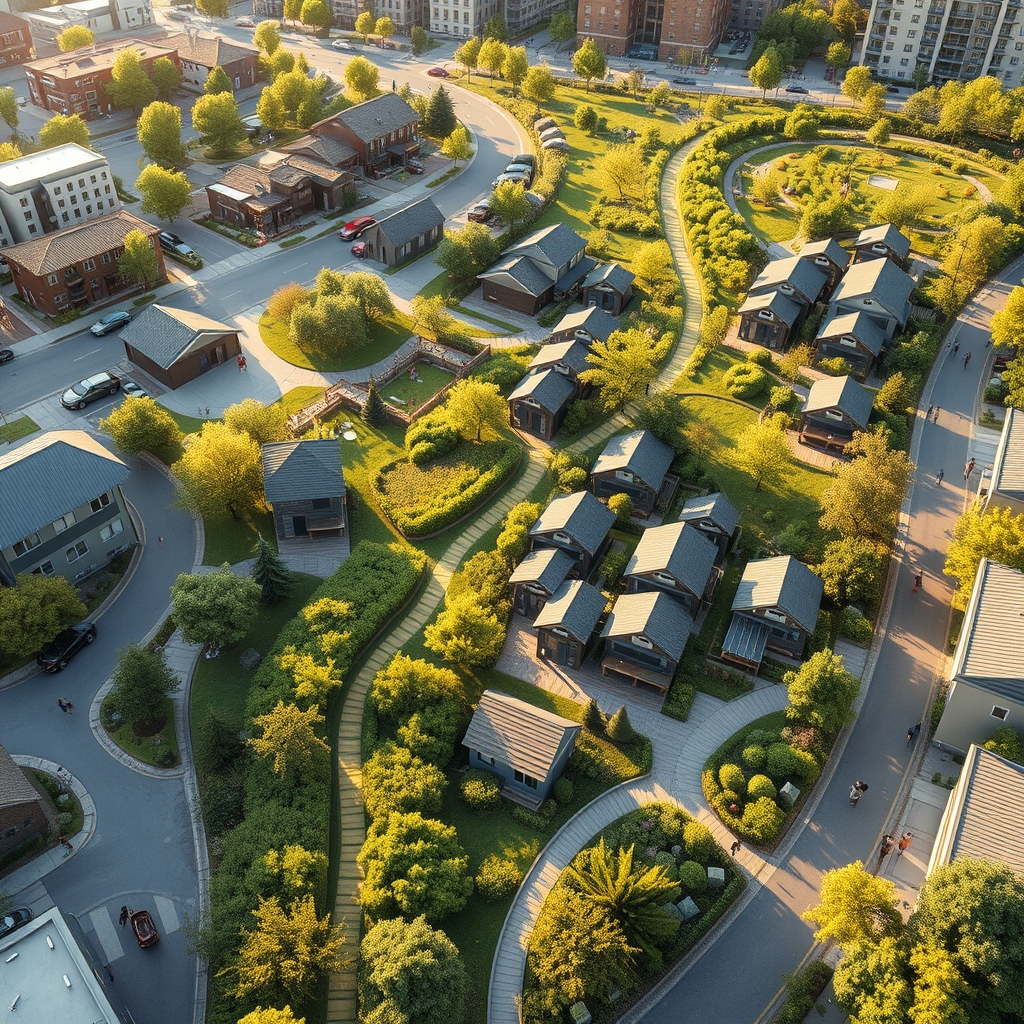
While linear green ribbons connect the broader urban landscape, pocket neighborhoods redefine the concept of community at a micro scale. Inspired by the idea of “third places”—spaces that are neither home nor work but where social bonds form—pocket neighborhoods are small, intentional clusters of homes centered around shared courtyards or gardens. These layouts prioritize pedestrian access, foster neighborly interactions, and create a sense of belonging that larger developments often struggle to achieve.
Ross Chapin, a pioneer in pocket neighborhood design, describes them as “a way to create a village within a neighborhood.” By limiting the number of homes to 12 or fewer, these layouts ensure that residents recognize one another, share responsibilities, and build trust. The design often includes communal spaces like tool sheds, outdoor kitchens, or fire pits, which become the backdrop for impromptu gatherings and shared experiences. In an era where digital interactions often replace face-to-face connections, pocket neighborhoods offer a tangible antidote to isolation.
Blending the Two: A New Urban Vision
The true potential of these concepts lies in their synergy. Imagine a city where linear green ribbons serve as the arteries, linking a series of pocket neighborhoods like beads on a string. Each neighborhood would have its own identity, yet all would be connected by a shared green infrastructure that promotes health, sustainability, and social cohesion. This model aligns with the principles of transit-oriented development, where walkable streetscapes and mixed-use zoning reduce car dependency and create vibrant, self-sustaining communities.
For instance, a pocket neighborhood could be situated along a green ribbon that doubles as a sustainable drainage corridor, managing rainwater while providing a scenic route for pedestrians. Nearby, a perimeter block design could frame the neighborhood, creating a sense of enclosure and security without the need for gated community barriers. Meanwhile, communal spatial allocation—such as shared gardens or playgrounds—would ensure that public spaces are both functional and inviting, fostering a culture of collaboration and stewardship.
Challenges and Considerations
Of course, integrating these concepts into existing urban frameworks is not without challenges. Zoning laws, for example, often favor low-density development, making it difficult to implement high-density cluster living or mixed-use zoning. Developers may also hesitate to adopt pocket neighborhood layouts, fearing lower profit margins compared to traditional subdivisions. Additionally, the success of linear green ribbons depends on long-term maintenance and community buy-in, which requires careful planning and ongoing engagement.
Yet, the benefits far outweigh the obstacles. Cities that have embraced these models report higher property values, lower crime rates, and improved mental well-being among residents. The key lies in shifting the narrative from “housing as a commodity” to “neighborhoods as ecosystems,” where every design decision is made with the goal of enhancing quality of life.
The Future of Urban Living
As urban populations continue to grow, the need for innovative housing layouts becomes more urgent. Linear green ribbons and pocket neighborhoods represent a shift away from car-centric, sprawling developments toward compact, connected, and sustainable communities. They remind us that cities are not just collections of buildings but living, breathing organisms that thrive when designed with intention and care.
The most successful urban spaces are those that adapt to the needs of their inhabitants while respecting the natural environment. By weaving together the threads of green infrastructure and intimate community design, we can create neighborhoods that are not only functional but also deeply human—places where people feel rooted, connected, and inspired to shape the future of urban living together.