The Quiet Revolution: How Buffer Zone Landscaping and High-Density Cluster Living Are Redefining Urban Serenity
Urban living has long been synonymous with noise, congestion, and a relentless pace of life. Yet, beneath the surface of bustling cities, a quiet revolution is underway—one that reimagines how we design the spaces between buildings, streets, and communities. At the heart of this transformation lies an often-overlooked element: buffer zone landscaping. When paired with high-density cluster living, it creates a harmonious balance between density and tranquility, proving that urban environments can be both vibrant and serene.
The Unsung Hero: Buffer Zone Landscaping
Buffer zones are the invisible threads that weave through urban landscapes, acting as natural dividers between different types of spaces. Traditionally, these zones were treated as afterthoughts—narrow strips of grass or generic shrubbery meant to soften the edges of roads, parking lots, or industrial areas. However, modern urban planners are redefining their purpose, transforming them into dynamic, multi-functional spaces that enhance livability.
Innovative buffer zone landscaping now incorporates native plants, rain gardens, and permeable surfaces to manage stormwater while creating habitats for local wildlife. These green corridors do more than just beautify; they act as sound barriers, reducing noise pollution from busy roads or commercial areas. In residential clusters, they provide a sense of separation without isolation, fostering privacy while maintaining a connection to nature. When designed thoughtfully, buffer zones can even double as recreational spaces, with walking paths, benches, and small gathering areas that encourage community interaction.
The Science of Serenity
Research has shown that exposure to green spaces lowers stress levels, improves mental health, and even boosts cognitive function. Buffer zone landscaping leverages this principle by integrating greenery into the fabric of high-density living. For instance, a well-designed buffer between a residential cluster and a commercial street can reduce perceived noise by up to 50%, creating a more peaceful living environment. This is particularly valuable in urban areas where space is at a premium, and every square meter must serve multiple purposes.
Moreover, these zones contribute to urban biodiversity, supporting pollinators like bees and butterflies, which are essential for healthy ecosystems. By prioritizing native plant species, buffer zones require less water and maintenance, aligning with sustainable urban design principles. They also help mitigate the urban heat island effect, where concrete and asphalt absorb and retain heat, making cities significantly warmer than their surrounding areas. Trees and vegetation in buffer zones provide shade and release moisture into the air, cooling the environment naturally.
High-Density Cluster Living: A New Paradigm
High-density living has often been associated with cramped apartments, lack of privacy, and a sense of anonymity. However, high-density cluster living flips this narrative by reimagining how people coexist in shared spaces. Instead of isolating residents in towering monoliths, this approach groups housing units around shared amenities, such as courtyards, rooftop gardens, or communal kitchens. The result is a sense of community that feels organic rather than forced.
One of the key advantages of cluster living is its efficiency. By concentrating housing units in specific areas, more land can be preserved for green spaces, parks, or even urban farming. This not only enhances the quality of life for residents but also reduces the environmental footprint of the development. For example, a cluster of townhouses with shared driveways and gardens requires less infrastructure than a sprawling suburb, leading to lower energy consumption and reduced emissions.
Designing for Connection
The success of high-density cluster living hinges on thoughtful design. Shared courtyards, for instance, can serve as the heart of a community, offering a space for children to play, neighbors to gather, and residents to grow gardens. These spaces are often designed with perimeter block layouts, where buildings form a protective enclosure around a central green area. This not only enhances security but also creates a sense of intimacy and belonging.
Another critical element is the integration of walkable streetscapes. In cluster living developments, streets are designed to prioritize pedestrians over cars, with wide sidewalks, bike lanes, and traffic-calming measures like speed bumps or chicanes. This encourages residents to walk or cycle, reducing reliance on cars and fostering a healthier, more active lifestyle. When combined with mixed-use zoning—where residential, commercial, and recreational spaces coexist—cluster living becomes a self-sustaining ecosystem where daily needs are met within a short distance.
The Synergy of Buffer Zones and Cluster Living
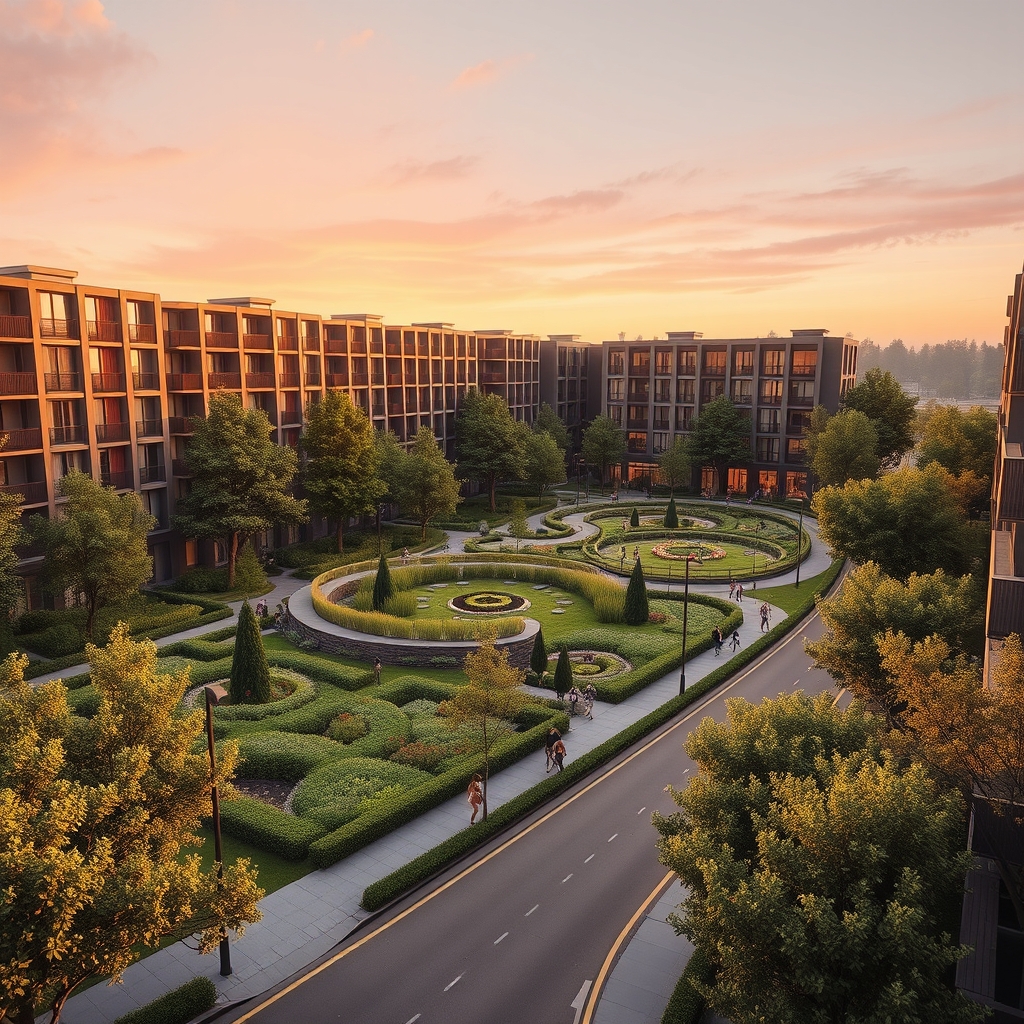
The true magic happens when buffer zone landscaping and high-density cluster living are combined. Imagine a residential cluster where buildings are arranged around a central courtyard, with a lush buffer zone separating it from a busy arterial road. The buffer zone not only shields residents from noise and pollution but also provides a scenic route for walking or cycling. Inside the cluster, the courtyard becomes a hub of activity, with residents tending to community gardens, children playing, and neighbors chatting over coffee.
This synergy extends beyond aesthetics. Buffer zones can be designed to integrate sustainable drainage corridors, which manage rainwater runoff while creating attractive landscapes. In a cluster living development, these corridors can double as pedestrian pathways, connecting different parts of the community while reducing the risk of flooding. Similarly, buffer zones can incorporate linear green ribbons, which are continuous strips of vegetation that link parks, playgrounds, and other green spaces. These ribbons not only enhance biodiversity but also provide a visual and physical connection to nature, making the urban environment feel less sterile and more alive.
Case Studies in Innovation
Several cities around the world are already embracing this approach with remarkable results. In Copenhagen, the Ørestad district is a prime example of high-density cluster living, where residential buildings are grouped around shared courtyards and connected by green corridors. The result is a vibrant, walkable neighborhood where residents enjoy both privacy and community.
In Singapore, the Punggol Eco-Town project takes buffer zone landscaping to the next level. The development features a network of green corridors that double as flood management systems, with rain gardens and bioswales integrated into the landscape. These corridors not only protect the community from flooding but also provide recreational spaces for residents, blurring the line between infrastructure and nature.
Closer to home, the Vauban neighborhood in Freiburg, Germany, demonstrates how buffer zones can enhance high-density living. The development is designed around a central green axis, with buildings arranged in clusters to maximize sunlight and ventilation. Buffer zones between the clusters and surrounding roads provide noise reduction and privacy, while shared courtyards foster a strong sense of community. The result is a neighborhood that feels both urban and idyllic, where density does not come at the expense of quality of life.
As cities continue to grow, the challenge of creating livable, sustainable, and connected communities becomes ever more pressing. The quiet revolution of buffer zone landscaping and high-density cluster living offers a compelling solution—one that proves urban environments can be both dense and serene, vibrant and peaceful. By rethinking the spaces between buildings and prioritizing the well-being of residents, we can design cities that not only accommodate growth but also nurture the human spirit. In this vision, the future of urban living is not just about where we live, but how we live—and how we connect with the world around us.