The Invisible Framework: How Micro District Planning and Shared Space Courtyards Are Redefining Urban Intimacy
Urban design is no longer just about bricks and mortar; it’s about weaving human connections into the very fabric of a neighborhood. The shift toward micro district planning and shared space courtyards is quietly revolutionizing how we experience community, blending efficiency with intimacy in ways that traditional layouts often overlook. These approaches don’t just reimagine space—they redefine how people interact, move, and belong within it.
The Rise of Micro Districts: Small-Scale, Big Impact
Micro districts are the urban equivalent of a well-crafted short story—compact, purposeful, and rich with meaning. Unlike sprawling master-planned estates, these small-scale neighborhoods are designed to foster walkability, reduce car dependency, and create a sense of immediacy. By concentrating essential services, green spaces, and residential units within a 15-minute radius, micro districts eliminate the need for long commutes while nurturing local economies.
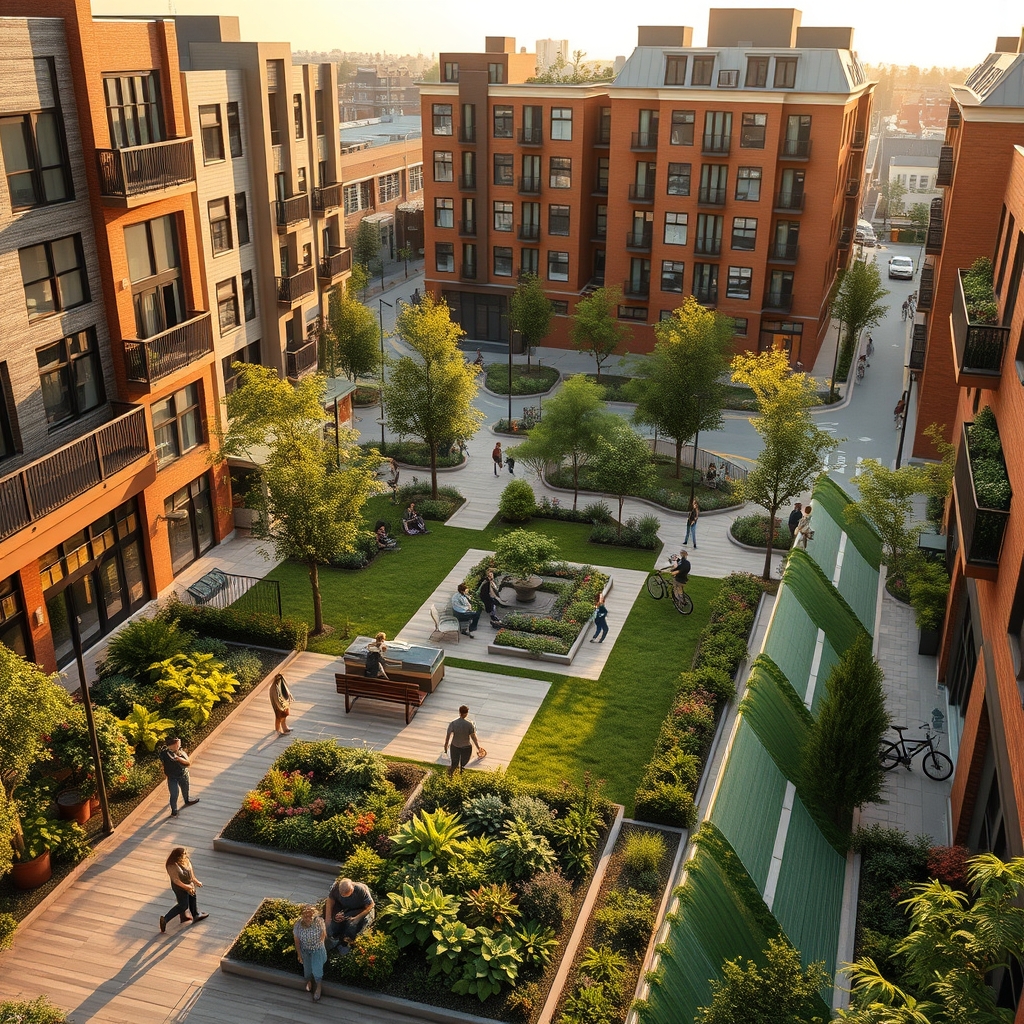
One of the most compelling aspects of micro district planning is its ability to balance density with livability. High-density cluster living doesn’t have to mean towering apartment blocks; instead, it can manifest as low-rise, mixed-use buildings arranged around shared space courtyards or pedestrian-first arteries. This approach ensures that residents aren’t just passing through their neighborhood but actively engaging with it—whether it’s chatting with a neighbor at a communal garden or grabbing coffee at a corner café designed to spill onto the sidewalk.
Walkability as a Social Catalyst
The success of micro districts hinges on one critical factor: walkability. When streets are designed for people rather than cars, they become more than just thoroughfares—they transform into social catalysts. Walkable streetscapes encourage spontaneous interactions, turning mundane errands into opportunities for connection. This is where perimeter block design and pocket neighborhood layouts come into play, creating enclosed or semi-enclosed spaces that feel safe, inviting, and inherently communal.
In contrast to the isolation of cul-de-sac-heavy suburbs, micro districts prioritize permeability. Gridiron plan variations, for instance, allow for multiple routes through a neighborhood, reducing congestion and making every journey feel dynamic. When combined with linear green ribbons—continuous strips of greenery that double as sustainable drainage corridors—these layouts don’t just move people; they move them through environments that nourish both body and mind.
Shared Space Courtyards: The Heart of Urban Intimacy
If micro districts are the skeleton of modern urban design, shared space courtyards are its beating heart. These communal areas serve as the social glue of a neighborhood, offering a respite from the hustle of city life while fostering a sense of ownership among residents. Unlike private backyards or gated community spaces, shared courtyards are designed to be inclusive, encouraging interaction without forcing it.
The beauty of these spaces lies in their flexibility. A courtyard might host a farmers’ market one day, a yoga class the next, and a quiet reading nook the day after that. This adaptability is key to their success, as it allows the space to evolve with the needs of the community. When paired with mixed-use zoning, which integrates residential, commercial, and recreational spaces, shared courtyards become even more vibrant, blurring the lines between public and private life.
Security Without Isolation
A common concern with communal spaces is security. How do you create openness without compromising safety? The answer lies in thoughtful design. Perimeter block design, for example, naturally creates a sense of enclosure, making it easier to monitor shared spaces without resorting to gated community security measures. Similarly, buffer zone landscaping—strategically placed greenery that acts as a natural barrier—can enhance privacy while maintaining visibility.
Moreover, the very nature of shared courtyards fosters a culture of collective responsibility. When residents feel invested in their environment, they’re more likely to look out for one another, creating a self-regulating system of security. This is a far cry from the fortress mentality of traditional gated communities, where isolation often breeds mistrust rather than connection.
The Future of Urban Living: Density with Dignity
The shift toward micro districts and shared courtyards reflects a broader evolution in urban design—one that prioritizes quality of life over sheer square footage. As cities grapple with housing shortages and environmental challenges, these layouts offer a compelling alternative to sprawl. By embracing high-density cluster living without sacrificing green space or community, they prove that density and dignity aren’t mutually exclusive.
Perhaps most importantly, these designs remind us that urban living isn’t just about efficiency; it’s about creating spaces that nurture the human spirit. Whether it’s the quiet corner of a shared courtyard or the bustling energy of a micro district’s main street, the best neighborhoods are those that make us feel both connected and free. The invisible framework of thoughtful design doesn’t just shape our cities—it shapes our lives, one interaction at a time.