The Modern Home as a Sanctuary of Layered Warmth: How Mixed Wood Tones, Earthy Palettes, and Smart Innovation Craft Depth and Character
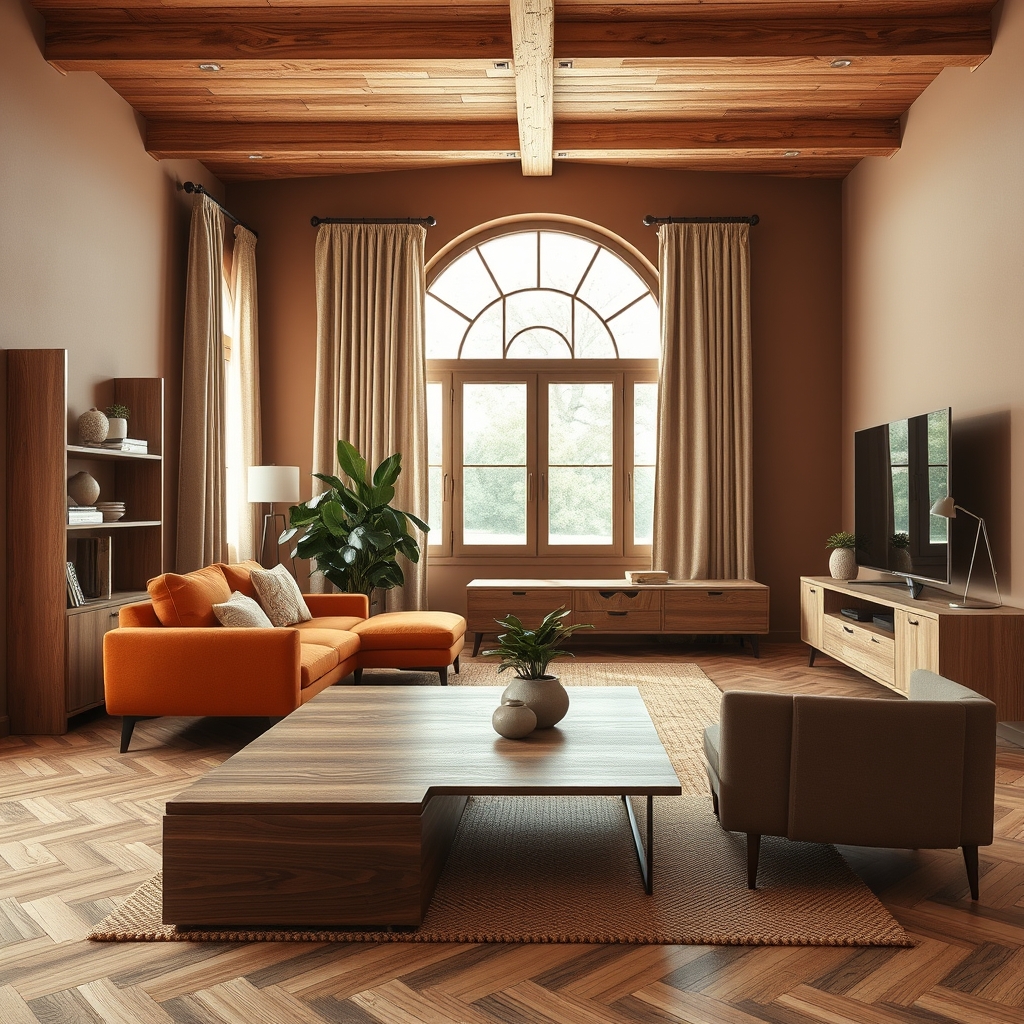
There’s a quiet revolution happening in modern home design—one that embraces depth, warmth, and intentionality without sacrificing the sleek functionality of contemporary living. It’s a movement that layers textures, tones, and technologies to create spaces that feel both timeless and cutting-edge. At its heart lies the art of mixed wood tones, a design choice that defies the old rules of matching everything perfectly. Instead, it celebrates the natural variations in grain, color, and finish, allowing different woods to coexist harmoniously, much like the diverse elements of a well-composed symphony.
The Beauty of Mixed Wood Tones
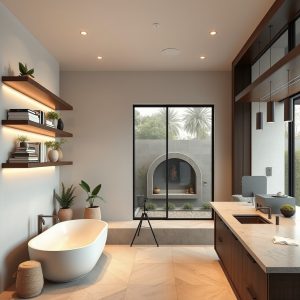
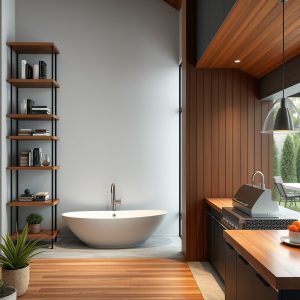
For decades, interior design adhered to a strict doctrine: stick to one wood tone to maintain cohesion. But modern heritage has flipped this script, proving that contrast can be just as powerful as uniformity. Picture a walnut dining table paired with light oak chairs, or a reclaimed teak bookshelf set against a backdrop of whitewashed pine paneling. These combinations don’t clash—they converse. They create visual interest, drawing the eye across a room and inviting touch, whether it’s the smooth finish of a mid-century sideboard or the rough-hewn charm of a rustic coffee table.
The key to mastering mixed wood tones lies in balance. Too many competing finishes can feel chaotic, but a thoughtful blend—perhaps two dominant tones with a third as an accent—adds richness and dimension. The result? A space that feels curated, lived-in, and deeply personal, as if each piece has its own story to tell.
Earthy Palettes: The Foundation of Modern Heritage
While mixed wood tones provide the texture, earthy palettes set the emotional tone of a home. These are the hues that ground a space—think warm terracotta, muted sage, deep ochre, and soft clay. They’re colors borrowed from nature, evoking a sense of calm and stability, yet they’re far from boring. When used strategically, they can make a room feel both expansive and intimate, depending on the lighting and materials they’re paired with.
One of the most striking ways to incorporate earthy palettes is through colour drenching, a technique where a single hue is applied across walls, ceilings, and even trim. This approach creates a cocooning effect, enveloping a space in warmth and making it feel like a retreat from the outside world. Imagine a bedroom drenched in a soft, dusty rose or a living room bathed in warm umber—these are spaces that don’t just look beautiful; they feel like a hug.
But earthy palettes aren’t just about paint. They extend to textiles, ceramics, and even metals. A linen sofa in oatmeal, a clay vase on a floating shelf, or aged brass hardware on a cabinet—all these elements contribute to a cohesive, nature-inspired aesthetic that feels both modern and timeless.
The Role of Smart Innovation
Modern heritage isn’t just about aesthetics; it’s also about how a home functions. Smart innovation plays a crucial role in this, seamlessly integrating technology into the fabric of a space without disrupting its warmth or character. Take smart bidets, for example. Once seen as a luxury, they’re now a staple in modern bathrooms, offering hygiene and comfort while blending into the design with sleek, minimalist fixtures. Or consider smart thermostats, which learn your habits and adjust the climate of your home for optimal comfort and energy efficiency—all while maintaining the earthy, uncluttered look of a modern sanctuary.
Another innovation that’s redefining modern living is the hidden pantry. Gone are the days of bulky cabinets that disrupt the flow of a kitchen. Today’s hidden pantries are designed to disappear, concealed behind seamless panels that match the surrounding cabinetry. They offer ample storage without sacrificing the clean lines and open feel of a modern kitchen, proving that functionality and beauty can coexist effortlessly.
Curved Furniture: Softening the Edges of Modern Design
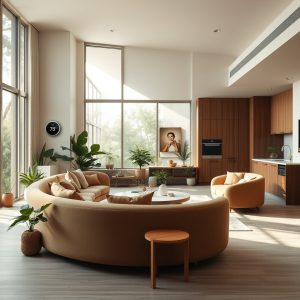
In a world where sharp angles and rigid lines have long dominated modern design, curved furniture is making a comeback as a way to soften spaces and create a sense of flow. These pieces—whether it’s a sculptural sofa, a rounded dining table, or an arched bookshelf—add a sense of movement and organic form to a room. They invite you to linger, to run your hand along their smooth contours, and to feel the space in a more tactile way.
Curved furniture also plays beautifully with mixed wood tones and earthy palettes. The soft lines of a walnut credenza can contrast with the angular geometry of a room, while a curved oak bench can add warmth to a space drenched in deep, earthy hues. Together, they create a dynamic interplay between form and function, proving that modern design doesn’t have to be cold or clinical.
Biophilic Design: Bringing the Outside In
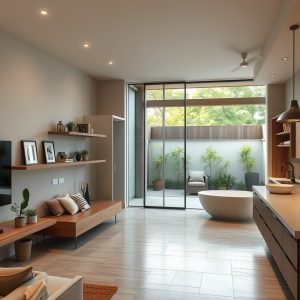
At the intersection of modern heritage and smart innovation lies biophilic design, a philosophy that seeks to connect our living spaces with the natural world. This goes beyond simply adding a few plants to a room—though greenery is certainly part of it. Biophilic design incorporates natural materials, patterns, and even sounds to create environments that nurture our well-being. Think wooden ceilings that mimic the dappled light of a forest canopy, stone countertops that evoke the rugged beauty of a mountainside, or water features that bring the soothing sound of a babbling brook indoors.
When combined with mixed wood tones and earthy palettes, biophilic design elevates a space from merely beautiful to truly restorative. It’s a reminder that our homes should be more than just functional—they should be places that nourish our souls, where every element, from the grain of the wood to the curve of a chair, contributes to a sense of harmony and balance.
The Future of Modern Heritage
As we look to the future of home design, one thing is clear: the lines between tradition and innovation, between warmth and technology, are blurring in the most exciting ways. Modern heritage is no longer about choosing between the old and the new—it’s about blending them into something entirely fresh. It’s about creating spaces that feel rooted in history yet equipped for the future, where every detail, from the mixed wood tones to the smart thermostat, tells a story of thoughtful design.
The homes we’re crafting today are more than just shelters; they’re sanctuaries of layered warmth, where depth and character are celebrated, and where every element, no matter how small, contributes to a sense of belonging. They’re spaces that don’t just look good—they feel good, too, wrapping us in comfort and connection, and reminding us that the best designs are those that speak to both the mind and the heart.