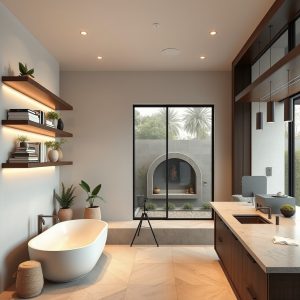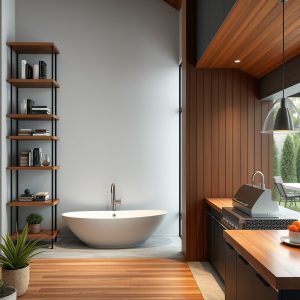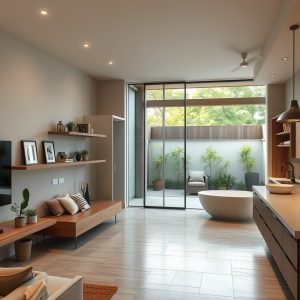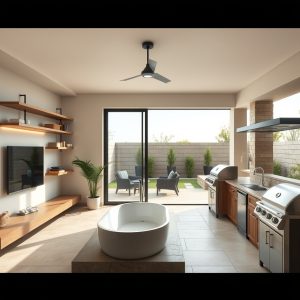
The Modern Home as a Sanctuary of Fluid Continuity: How Earthy Palettes, Curved Furniture, and Smart Innovation Craft a Living Space That Adapts and Endures
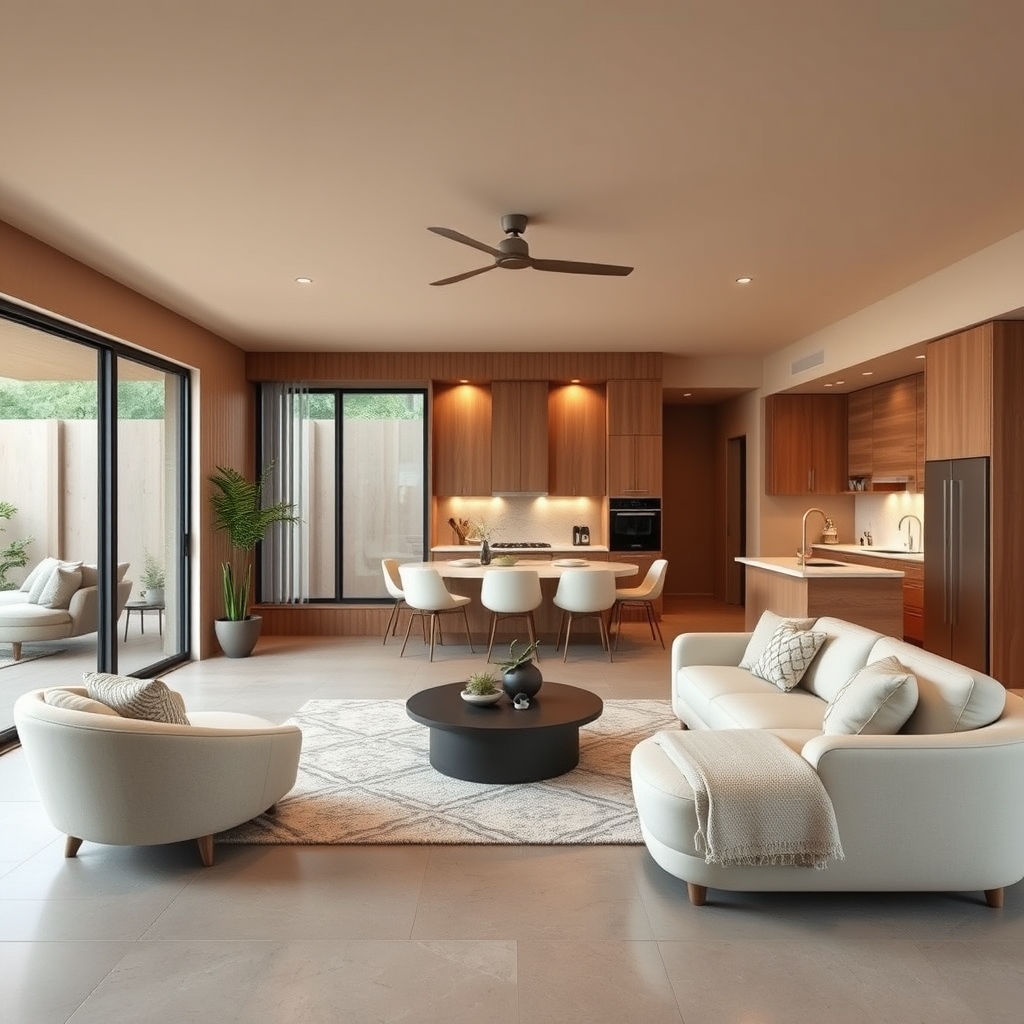
In the realm of modern home design, the concept of fluid continuity is gaining traction as a way to create living spaces that adapt and endure. This approach, which emphasizes the seamless integration of various elements, is not just about aesthetics; it’s about functionality, sustainability, and the ability to evolve with the needs of its inhabitants. One of the key elements of fluid continuity in modern homes is the use of earthy palettes.
Earthy Palettes: The Foundation of Fluid Continuity
Earthy palettes, characterized by warm, natural tones like beige, brown, and green, are a cornerstone of modern home design. These palettes create a sense of calm and harmony, and they are particularly effective in promoting a biophilic design approach. Biophilic design, which seeks to connect people with nature, is a key aspect of fluid continuity. By incorporating earthy tones into their homes, homeowners can create a living space that feels like an extension of the natural world.
Curved Furniture: Adding a Sense of Flow
Another important element of fluid continuity in modern homes is the use of curved furniture. Unlike traditional, angular furniture, curved pieces create a sense of flow and continuity within a space. They can make a room feel larger and more open, and they can also add a touch of elegance and sophistication. Curved furniture is particularly effective in spaces with a biophilic design approach, as it can help to create a sense of harmony between the built environment and the natural world.
Smart Innovation: Enhancing Functionality and Sustainability
Smart innovation is another key aspect of fluid continuity in modern homes. This includes the use of smart thermostats, smart bidets, and other innovative technologies that can enhance the functionality and sustainability of a living space. Smart thermostats, for example, can help to reduce energy consumption by learning the heating and cooling preferences of the home’s inhabitants. Smart bidets, on the other hand, can provide a more hygienic and comfortable bathing experience, and they can also help to conserve water.
Kitchen Zoning: Creating a Functional and Aesthetic Space
Kitchen zoning is another important aspect of fluid continuity in modern homes. This involves the strategic placement of appliances, storage, and other elements to create a functional and aesthetic space. By zoning the kitchen, homeowners can create a more efficient and enjoyable cooking experience, and they can also create a space that is both beautiful and practical. Kitchen zoning is particularly effective in open concept homes, where the kitchen is often a central feature of the living space.
Outdoor Kitchens: Extending the Living Space
Outdoor kitchens are another key aspect of fluid continuity in modern homes. These spaces, which are often an extension of the indoor kitchen, can provide a place for cooking, dining, and entertaining outdoors. Outdoor kitchens can also create a sense of fluid continuity between the indoor and outdoor living spaces, and they can provide a place for relaxing and enjoying the natural world.
Spa Bathrooms: Creating a Sanctuary of Serenity
Spa bathrooms are another important aspect of fluid continuity in modern homes. These spaces, which are designed to provide a relaxing and rejuvenating experience, can create a sanctuary of serenity within the home. Spa bathrooms can include features like heated floors, rainfall showers, and other luxurious amenities, and they can provide a place for unwinding and reconnecting with oneself.
The modern home of fluid continuity is a living space that adapts and endures. By incorporating earthy palettes, curved furniture, smart innovation, kitchen zoning, outdoor kitchens, and spa bathrooms, homeowners can create a living space that is not only beautiful and functional, but also sustainable and adaptable. This approach to home design is not just about creating a space that is aesthetically pleasing; it’s about creating a living environment that supports the needs and desires of its inhabitants, and that can evolve and grow over time.